
If you need time away from work because a close family member has died, become seriously ill or is facing another distressing emergency, your employer may allow compassionate leave. The important point in Hong Kong is that compassionate leave is generally an employer-provided benefit rather than a standalone statutory leave entitlement under the Employment Ordinance.
This means there is no single Hong Kong-wide rule saying that every employee receives two, three or five days. Whether compassionate leave is available, whether it is paid, which relatives qualify and what evidence you need usually depends on your employment contract, staff handbook or internal HR policy.
That flexibility explains why two employees working for different Hong Kong employers can face the same family bereavement but receive very different leave arrangements. One company might provide three days on full pay. Another might provide two days, allow extra unpaid leave for overseas travel or ask the employee to use annual leave after the compassionate leave entitlement has been exhausted.
The practical answer to what is compassionate leave is therefore straightforward: it is authorised time away from work intended to help you deal with serious or distressing family circumstances, but the exact entitlement must be checked against your employer’s rules.
What Is Compassionate Leave?
The compassionate leave meaning is broader than simply “time off for a funeral” in some workplaces. An employer may design its policy to cover the death of a close relative, a life-threatening illness, a serious family emergency or another situation where an employee needs to step away from work because of an immediate family crisis.
Other employers use compassionate leave only for bereavement. In those organisations, serious illness may instead be handled through annual leave, unpaid leave, flexible working, special casual leave or another family-friendly arrangement.

This is why you should not assume that the phrase compassionate leave has exactly the same meaning in every Hong Kong company. Current government family-friendly employment guidance treats compassionate leave as an example of special leave that employers can introduce to meet employees’ family needs. It specifically recognises situations where a family member dies or is sick. The Employment Ordinance, meanwhile, sets statutory rules for benefits such as annual leave, sickness allowance, maternity leave, paternity leave and statutory holidays, but does not create a separate universal compassionate leave entitlement.
| Point | Compassionate Leave | Bereavement Leave | Hong Kong Practical Meaning |
|---|---|---|---|
| Typical purpose | May cover death, serious illness or other urgent family circumstances if the policy allows | Usually specifically connected with a death | Employer terminology matters because neither label has one universal contractual definition. |
| Standalone statutory entitlement | No universal standalone entitlement under the Employment Ordinance | No universal standalone bereavement leave entitlement under the Employment Ordinance | Check the employment contract, staff handbook or HR policy. |
| Pay | May be paid or unpaid | May be paid or unpaid | Some employers provide full-pay leave as an enhanced benefit. |
| Qualifying relatives | Defined by the employer | Defined by the employer | Do not assume siblings, grandparents, partners or in-laws are automatically included. |
| Evidence | Reasonable supporting information may be requested | Death or funeral-related evidence may be requested | Evidence procedures should be clear, proportionate and consistently applied. |
Source basis: current GovHK and Labour Department family-friendly employment guidance, the Hong Kong Employment Ordinance framework and current Hong Kong employer policies. These terms are policy-based rather than separate statutory leave categories.
Compassionate Leave Definition
A practical compassionate leave definition is: authorised absence from work that allows you to deal with a serious or distressing family event without the absence being treated as unexplained or unauthorised.
That definition deliberately does not specify a fixed number of days. In Hong Kong, the number of days is normally a policy decision.
It also does not automatically mean full pay. Paid compassionate leave is common among employers that offer it as an enhanced employee benefit, but payment depends on the applicable terms.
From an HR perspective, a good policy should answer several questions clearly:
- What circumstances qualify?
- Which family relationships are included?
- How many working days are available?
- Is the leave paid in full, partly paid or unpaid?
- Can additional annual or unpaid leave be taken?
- When must the leave be used?
- Can it be split into half-days or separate days?
- What supporting information may HR request?
- Does overseas travel allow extra leave?
- Who approves the request?
When these points are missing, employees often discover the rules only after a bereavement has happened. That creates unnecessary uncertainty at exactly the time when the employee has the least capacity to deal with administrative questions.
For employers, compassionate leave therefore works best as a written benefit rather than an informal arrangement decided differently by each line manager.
Compassionate Leave vs Bereavement Leave
Compassionate leave and bereavement leave are often used interchangeably, but they do not always mean exactly the same thing.
Bereavement leave normally refers specifically to leave following someone’s death. It may cover arranging a funeral, attending funeral or memorial services, dealing with estate or family matters, travelling to another country or simply having time away from work immediately after a loss.
Compassionate leave can be broader. A policy may allow it when an immediate family member is critically ill or seriously injured even if no death has occurred. Hong Kong’s Labour Department family-friendly guidance uses compassionate leave as an example of support where a family member dies or is sick.
However, there is no requirement for private employers to use that broader definition. An employment handbook may say “compassionate leave” but then define qualifying events entirely in terms of bereavement.
That is why the policy wording matters more than the label.
Suppose your employer provides three days of compassionate leave “upon the death of an immediate family member”. Your father is admitted to intensive care but survives. The situation is clearly distressing, but the compassionate leave clause as written may not apply because its qualifying event is death.
HR may still approve annual leave, unpaid leave, remote work or another special arrangement. But that is different from saying the employee automatically has a contractual compassionate leave entitlement.
Conversely, a broader policy could specifically include serious illness. In that company, the same employee may be eligible before bereavement occurs.
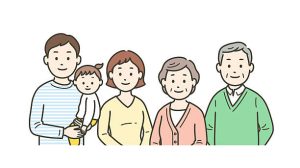
Who Is Usually Considered a Close Family Member?
There is no universal private-sector list for compassionate leave Hong Kong policies. Each employer can define the relevant relationships, subject to the employment contract and applicable law.
Common categories include:
- spouse;
- child;
- parent;
- parent-in-law;
- grandparent;
- grandchild;
- brother or sister;
- step-parent or step-child;
- adoptive parent or adopted child; and
- in some policies, grandparents-in-law or children-in-law.
Current Hong Kong policies demonstrate how much these definitions can differ.
| Policy Example | Family Members Covered | Evidence / Records | Practical Lesson |
|---|---|---|---|
| Hong Kong Government employees | Spouse, parents, parents-in-law, grandparents, great-grandparents, children, children-in-law, grandchildren and siblings | Application handled under the relevant civil service procedures | A written family definition removes uncertainty over relationships such as siblings and in-laws. |
| Hong Kong Baptist University | Spouse, children, parents, parents-in-law, grandparents, grandparents-in-law, siblings, great-grandparents, children-in-law, grandchildren, plus specified adoptive and step relationships | Copy of death certificate submitted to HR | The policy expressly addresses step and adoptive family relationships. |
| The University of Hong Kong | Spouse, child, parent, parent-in-law, grandparent, grandparent-in-law, brother and sister | Supporting documents upon request | The policy defines immediate family and gives HR flexibility over evidence. |
Source basis: current government, HKBU and HKU leave arrangements accessed in 2026. They are examples of employer policy design, not a universal definition for all Hong Kong employees.
There is another legal concept worth separating from compassionate leave eligibility. Under Hong Kong’s Family Status Discrimination Ordinance, “family status” concerns responsibility for the care of an immediate family member, with immediate family relationships covering blood, marriage, adoption or affinity. That anti-discrimination framework is broader than many individual compassionate leave policies.
It does not mean every person covered by the Family Status Discrimination Ordinance must automatically qualify for paid compassionate leave. It means employers should be careful not to treat employees unlawfully because of their family status and should apply employment benefits and conditions fairly.
How Does Compassionate Leave Work in Hong Kong?
Compassionate leave Hong Kong arrangements usually begin with the employer’s own written rules. Unlike statutory annual leave or statutory sickness benefits, there is no standard formula that automatically gives every private-sector employee a specified number of compassionate leave days.
The first document to check is your employment contract. If the benefit is not mentioned there, look at your employee handbook, HR portal, leave policy or collective terms that form part of your employment arrangements.
A typical process may work like this:
- You tell your manager or HR as soon as reasonably possible that a qualifying family event has occurred.
- You explain enough information for the employer to understand which leave category may apply.
- HR checks whether the relationship and event fall within the compassionate leave policy.
- The leave is recorded separately from annual leave if the company provides a distinct compassionate leave benefit.
- You provide supporting information if the policy requires it or HR reasonably requests it.
- If you need more time than the policy provides, you discuss annual leave, unpaid leave, flexible working or another arrangement.
Good HR practice matters because family emergencies do not arrive according to a predictable timetable. An employee may need to leave work immediately, travel overseas within hours or make arrangements before a formal death certificate becomes available.
A rigid requirement that every document must be submitted before leave can start may therefore be impractical. A more workable process is often to approve urgent absence provisionally and allow the employee to provide evidence afterwards where the policy permits.
Employers also need consistency. If one employee receives paid leave for a parent’s death while another employee in comparable circumstances is refused solely because a different manager handled the request, the policy becomes difficult to defend internally.
The Equal Opportunities Commission’s employment guidance is also relevant here. Hong Kong’s Family Status Discrimination Ordinance protects employees against discrimination on the ground of having responsibility for the care of an immediate family member. Employers are encouraged to use consistent criteria when applying terms, conditions and employee benefits.
Is Compassionate Leave Paid?
It can be, but Hong Kong law does not impose one universal paid compassionate leave rate on private employers.
If your contract says that compassionate leave is “with full pay”, the company should administer the benefit according to those contractual terms. If the policy says the leave is unpaid, the position will be different. Some employers provide a small block of paid compassionate leave and allow employees to use annual leave if they need more time.
Current policies show the range of possible approaches.
| Employer / Policy | Leave Amount | Pay / Timing | Key Conditions |
|---|---|---|---|
| Hong Kong Government employees | Up to 3 days per occasion | Authorised absence; can be taken within 6 months from the family member’s death | Available to serving government employees under the government scheme; current family definition includes siblings. |
| Hong Kong Baptist University | 3 working days; up to 5 working days where travel is required for a non-local funeral | Full pay; normally taken within 2 months from the death | Eligible full-time staff; may be taken continuously or in separate periods, with half-day as the smallest unit. |
| The University of Hong Kong | Up to 2 working days; up to 7 calendar days if travelling outside Hong Kong is required | Provided under the University’s staff leave arrangements | Applies to the death of an immediate family member; supporting documents may be requested. |
Source basis: current Hong Kong Government, HKBU and HKU policies accessed in 2026. These figures demonstrate policy variation and should not be treated as a statutory Hong Kong market standard.
This table is particularly useful because it shows why statements such as “Hong Kong compassionate leave is three days” are inaccurate.
Three days is one policy choice. Two days is another. Some employers extend the allowance when international travel is required. Others may provide longer paid leave, shorter leave or no separate compassionate leave at all.
For payroll teams, the key question is whether the leave is contractual paid leave. If it is, HR and payroll should use the policy consistently and should not casually deduct annual leave or salary where the employee has been approved for paid compassionate leave.
Where extra time is needed beyond the paid entitlement, the employee and employer should clarify how those additional days are recorded. Possible arrangements include annual leave, unpaid leave or another agreed form of absence.
How Many Days of Compassionate Leave Can You Take?
There is no universal statutory answer for private-sector employees.
Your entitlement may be:
- a fixed number of working days for each qualifying death;
- a different number depending on the relationship;
- additional days if overseas travel is required;
- a maximum number per event rather than per year;
- a yearly overall cap;
- paid leave followed by optional unpaid leave; or
- entirely discretionary.

The wording “per occasion” is important. A policy offering three compassionate leave days per occasion is different from a policy offering three days in total per calendar year.
Travel rules are another important distinction. If an employee’s family lives outside Hong Kong, two or three working days may be insufficient simply because flights and funeral arrangements consume much of the available period. Some employers therefore provide an extension for overseas funerals.
HKBU’s current policy is a good example: eligible employees receive three working days of full-pay compassionate leave, with two additional working days available where attendance at a non-local funeral requires travel, giving a maximum of five working days.
HKU takes a different approach, providing up to two working days but up to seven calendar days where travel outside Hong Kong is required.
These different designs highlight something HR professionals often overlook: working days and calendar days are not the same measure.
Seven calendar days may contain only five normal working days for an employee on a standard Monday-to-Friday schedule. A leave policy should therefore specify its unit rather than simply stating “seven days”.
Employees should also check whether weekends, rest days, statutory holidays or public holidays are counted against the entitlement. Again, this is generally a policy question where compassionate leave is concerned.
When Can Employees Take Compassionate Leave?
The circumstances depend on the employer’s definition. Some Hong Kong policies are narrow and apply only following the death of an eligible family member. Others use compassionate leave more broadly to cover serious illness and urgent family situations.
Situations that may be covered include:
- Death of a spouse or partner. This is one of the clearest circumstances commonly covered by bereavement or compassionate leave policies.
- Death of a child. Policies should state whether biological, adopted and step-children are treated equally for leave purposes.
- Death of a parent. This commonly includes biological parents, while the treatment of adoptive and step-parents should be expressly stated.
- Death of a parent-in-law. Many employer policies include parents-in-law, but you should not assume this unless the definition says so.
- Death of a grandparent. Grandparents are included in a number of current Hong Kong institutional policies.
- Death of a sibling. Brothers and sisters are covered by many policies. The current Hong Kong Government employee arrangement also includes siblings.
- Serious or life-threatening illness of a close family member. Broader compassionate leave policies may cover this, and Labour Department family-friendly guidance specifically identifies family sickness as a situation in which employers may offer compassionate leave.
- A severe accident involving an immediate family member. Whether this qualifies depends on whether the policy extends beyond bereavement.
- Funeral arrangements. Leave may be used to organise or attend a funeral, cremation, burial, memorial event or related family arrangements.
- Overseas funeral travel. Some employers expressly provide additional time where you must travel outside Hong Kong.
- Urgent family responsibilities immediately following death. This may include helping another family member, handling practical arrangements or dealing with documentation.
- Other exceptional family circumstances. A discretionary policy may give HR flexibility where a situation does not fit a predefined category but clearly warrants support.
Be careful with the last category. A compassionate approach from an employer does not mean every difficult personal situation automatically qualifies as compassionate leave.
For example, the death of a close friend may cause significant grief, but an employer’s contractual definition may cover only specified family members. HR could still approve annual leave, unpaid leave or discretionary special leave, but it should distinguish that accommodation from the contractual compassionate leave entitlement.
The same applies to pets. Some employers internationally have introduced pet bereavement benefits, but there is no Hong Kong statutory requirement for this. Unless the company’s policy covers it, the employee would need another leave arrangement.
The more important HR lesson is to separate entitlement from discretion. If a situation falls within the written definition, managers should administer the stated benefit. If it falls outside the definition but the organisation still wants to help, the decision should be recorded as a discretionary arrangement rather than quietly changing the policy only for one employee.
This makes future cases easier to handle and supports more consistent treatment.
What Proof Is Needed for Compassionate Leave?
Because compassionate leave is usually contractual rather than statutory, there is no universal Hong Kong document that every employee must submit.
The employer may set reasonable evidence requirements in its policy, particularly where the leave is paid. Current employer policies show different approaches: HKBU expressly requires a copy of a death certificate, whereas HKU states that supporting documents should be produced for verification upon request.
Depending on the circumstances and policy, supporting information might include:
- A death certificate. This provides formal evidence of death but may not always be available immediately when urgent leave begins.
- A funeral notice or memorial notice. This may help confirm the event where formal documentation is pending.
- A hospital or medical document. Where the compassionate leave policy covers critical illness or serious injury, HR may ask for reasonable evidence that the qualifying situation exists.
- Information confirming the family relationship. This may occasionally be necessary where the policy depends on whether the person was a parent, parent-in-law, sibling or another defined relative.
- Travel information. If additional leave is provided because you need to attend a funeral outside Hong Kong, HR may reasonably ask for travel-related information.
- A written declaration. Some employers may accept an employee declaration where obtaining formal documents immediately is difficult.
- Other supporting records permitted by the policy. This could include information from a funeral home, hospital or relevant authority.
However, “proof” should not become an excuse for collecting excessive personal information.
Hong Kong privacy guidance for human resources management states that employers may collect employee and family-member information for compensation and benefits where the data are necessary to determine eligibility, but the collection should be fair and should not be excessive for the purpose.
This has a practical implication. If all HR needs to establish is that an employee’s parent has died, demanding complete unrelated medical records about the parent’s treatment would usually go far beyond what is necessary for administering a bereavement benefit.
A proportionate approach is better:
- tell employees in advance what evidence may be requested;
- collect only what is reasonably needed to confirm eligibility;
- avoid demanding documents that cannot realistically be produced immediately;
- allow documents to follow after urgent leave where appropriate;
- limit access to sensitive documents to staff who actually need them;
- store records securely;
- avoid sharing details of the bereavement with colleagues unless necessary; and
- apply the same evidence standard to comparable cases.
Employees should also tell HR promptly if a required document will be delayed. For example, a death occurring overseas may involve different documentation and processing times. A short explanation at the start usually makes the situation easier to manage than remaining silent and attempting to resolve the evidence issue after returning to work.
For HR teams, the best compassionate leave policy combines clear rules with enough discretion to deal with real-life emergencies. It should specify the qualifying relationships and basic evidence requirements without turning bereavement into a bureaucratic test.
Ultimately, the most useful answer to what is compassionate leave in Hong Kong is not a universal number of days. It is an employer-defined form of authorised family leave whose scope, pay, duration and evidence requirements need to be read directly from the employee’s applicable terms.
References
- GovHK — Family-friendly Employment Practices. Current government guidance identifies compassionate leave as one form of special leave that employers may provide to support employees’ family needs. https://www.gov.hk/en/residents/employment/recruitment/familyfriendly.htm
- Hong Kong Labour Department — Good Employer Charter: Family-friendly Employment Practices. The guidance describes compassionate leave as a possible employer benefit when an employee needs to deal with family duties following the death or sickness of a family member. https://www.gec.labour.gov.hk/en/familyFriendly1.html
- Hong Kong Labour Department — Employment Ordinance FAQ. Official statutory employment framework used to distinguish compassionate leave from statutory entitlements created by the Employment Ordinance. https://www.labour.gov.hk/eng/faq/cap57a_whole.htm
- Equal Opportunities Commission — Code of Practice on Employment under the Family Status Discrimination Ordinance. Covers family status, immediate family relationships and the need for consistent treatment in employment benefits and conditions. https://www.eoc.org.hk/en/training-and-education/eo-club/code-practice-on-employment/family-status-discrimination-ordinance
- Hong Kong Government / Joint Secretariat — Current Compassionate Leave Arrangement for Government Employees. Current 2026 arrangement provides up to three days per occasion, with the family-member definition including siblings and leave available within the applicable six-month period. https://www.jsscs.gov.hk/reports/en/69/69.pdf
- Hong Kong Baptist University — Policy on Compassionate Leave. Current policy provides three working days on full pay, with up to two additional working days for a non-local funeral, subject to the stated eligibility and documentation requirements. https://cmc.hkbu.edu.hk/content/dam/hro-assets/our-hr/policies-and-procedures/05-leave/compassionate-leave.pdf
- The University of Hong Kong — Leave. Current compassionate leave arrangement provides up to two working days, or up to seven calendar days where travel outside Hong Kong is required, for the death of an immediate family member. https://www.hr.hku.hk/benefits/leave.php
- Office of the Privacy Commissioner for Personal Data — Code of Practice on Human Resource Management. Provides guidance that employment-related personal data collected for compensation and benefits should be necessary for determining eligibility, fair in collection and not excessive for the purpose. https://www.pcpd.org.hk/english/data_privacy_law/code_of_practices/code_hrm_2.html
Disclaimer
The content of this article reflects the author’s personal views and is provided for informational purposes only. It should not be regarded as professional investment, medical, legal, employment, or other specialist advice. Some information in this article is sourced from publicly available online materials. If any content is found to infringe copyright, please contact the website administrator for prompt removal or correction.
Readers are solely responsible for any actions taken based on the information provided in this article. The website accepts no legal liability for any risks, losses, or damages arising from such actions.
For more details, please see the Disclaimer.