Who can apply working holiday visa Hong Kong: Age and eligibility criteria
The working holiday visa Hong Kong arrangement is designed for young people from participating economies whose main reason for coming to Hong Kong is a holiday. Short-term employment is permitted as an incidental part of that stay, and some applicants can also take approved short courses or training. The visa can allow a stay of up to 12 months, although the detailed work and study conditions depend on your nationality.
Age limits and eligible nationalities
The working holiday visa Hong Kong age requirement in 2026 is 18 to 30. You must hold a valid national passport issued by one of the participating economies and ordinarily reside in that economy. Your primary intention must be to holiday in Hong Kong. For applicants from the Netherlands, the Immigration Department specifies habitual residence in the European part of the Netherlands.
There is also an annual quota for each participating economy. Qualified applications are approved on a first-come, first-served basis, so the quota is a practical consideration as well as an eligibility issue. The 2026 figures are listed below.
| Participating economy | 2026 annual quota | Minimum maintenance funds | Maximum work with one employer or total work period |
|---|---|---|---|
| Australia | 5,000 | HK$20,000 | Up to 3 months with the same employer |
| Austria | 100 | Up to 6 months | |
| Canada | 193 | HK$15,000 | Up to 3 months with the same employer |
| France | 750 | HK$25,000 | Up to 6 months with the same employer |
| Germany | 300 | HK$20,000 | Up to 3 months with the same employer |
| Hungary | 200 | HK$25,000 | Up to 6 months with the same employer |
| Ireland | HK$20,000 | Up to 3 months with the same employer | |
| Japan | 1,500 | Up to 6 months with the same employer | |
| Republic of Korea | 1,000 | ||
| Netherlands | 100 | ||
| New Zealand | 400 | HK$14,000 | Up to 3 months with the same employer |
| Sweden | 500 | HK$20,000 | Up to 6 months with the same employer |
| United Kingdom | 1,000 | HK$22,000 | Up to 12 months |
The table highlights why you should not rely on a generic statement that everyone can work for the same employer for 12 months. That is only the position listed for British participants. For many other nationalities, the limit is 3 or 6 months with one employer. The distinction matters when you are negotiating a contract, planning seasonal work, or deciding whether a single employer can cover most of your stay.
Financial proof and health insurance mandates
Your proof of funds must meet the minimum amount set for your nationality. A bank statement or savings account record can be used as financial evidence, and the Immigration Department also requires either a return air ticket or evidence that you have enough money to purchase one. This means the stated maintenance threshold should not be treated as your entire arrival budget. You still need to plan for accommodation, transport, food, deposits and the cost of settling in.
Insurance requirements also vary by nationality. Participants from Canada, Hungary, Ireland, the Republic of Korea, the Netherlands, New Zealand, Sweden and the United Kingdom must agree to maintain medical, healthcare including hospitalisation, repatriation and liability insurance throughout their stay. French participants need comprehensive liability and medical cover including hospitalisation, pregnancy, disability and repatriation. Austrian and German participants need comprehensive liability and medical insurance covering hospitalisation and repatriation, while Japanese participants must have sufficient medical insurance.
For a long stay, the useful approach is to read the insurance wording rather than checking only the policy name. The Labour Department specifically advises participants to consider specialist working-holiday cover and not assume that a standard travel policy automatically gives suitable protection for work-related activities.
Step-by-step application for a working holiday visa Hong Kong
The application process is now digital. The Immigration Department requires Working Holiday Scheme applications and supporting documents to be submitted through its online application system. Postal, drop-in-box and in-person submission are no longer the standard route for this scheme.
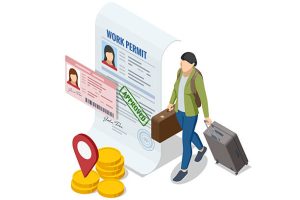
Gathering required application documents
Before opening the online application, prepare clear electronic copies of the documents you are likely to need. The current guidance lists your valid travel document, evidence of sufficient funds for maintenance, a return ticket or evidence of funds for the return fare, and proof relating to the required insurance coverage. The application process also requires information about your personal details and background, including a declaration concerning criminal convictions.
- Valid passport showing your name, nationality, issue date and expiry date.
- Bank statement, savings account record or other acceptable proof showing the required maintenance funds for your nationality.
- Return air ticket or evidence that you can afford to purchase one.
- Insurance evidence matching the coverage required for your nationality.
- Recent photograph and the other personal information requested by the online system.
- Accurate residential and contact details, including your email address.
- Any supplementary document the Immigration Department requests during processing.
A common avoidable problem is treating the application form number as a detail that does not matter. For 2026, the current guidance document is ID(E) 940A. ID 992A is a different form for entry for training in Hong Kong. You should therefore not download ID 992A and use it as a working holiday application.
It is also worth checking every passport number, date and previous address before you submit. A small inconsistency between the application and your supporting documents can lead to requests for clarification and delay the point at which the Immigration Department considers the application complete.
Submitting the application online or by post
In 2026, the correct route is online. The Immigration Department states that applicants under the Working Holiday Scheme must use the electronic application system and upload the supporting documents there. The online service is also available to people who do not use iAM Smart.
You can use the Immigration Department website, the GovHK electronic visa service, or the Immigration Department mobile application to access electronic visa services. The online system allows you to submit documents and, where required, upload supplementary material later. Once the application has been acknowledged, you can use the application status service to check progress.
Because quotas are fixed by nationality, timing matters. The application system may be technically simple, but a complete application does not create an extra quota. If your nationality is approaching its annual allocation, check the official Working Holiday Scheme page before spending money on non-refundable travel arrangements.
Hong Kong working holiday visa processing time and fees
For Hong Kong working holiday visa processing time, the clearest 2026 benchmark is the Immigration Department’s performance pledge. It aims to finalise 100% of Working Holiday Scheme entry visa applications within 2 weeks once all necessary documents have been received. This is a departmental service target, not a promise that every individual case will be completed within exactly 14 calendar days. More time may be needed where documents are incomplete or further checks are required.
Expected processing timeline and waiting periods
The practical timetable is therefore better understood as a sequence rather than a single number. First, you prepare the documents and submit online. The Immigration Department acknowledges receipt. It then assesses the application and may request supplementary documents. Once a decision is made, you receive the application result notification. If payment is required, you complete it through the stated online payment route and then download or print your e-Visa.
| Stage | What you do | What can affect the timing |
|---|---|---|
| 1.Preparation | Collect passport, funds, return-flight evidence and insurance proof | Missing or unclear documents |
| 2.Online submission | Complete the electronic application and upload documents | Incorrect information or incomplete uploads |
| 3.Immigration assessment | Wait for acknowledgement and decision | Supplementary documents or case complexity |
| 4.Visa issue | Pay applicable fee, then download e-Visa | Payment method or outstanding instructions |
Keep your planned arrival date separate from the date you submit the application. The scheme is subject to immigration approval and quota availability, so booking a flight before you have a visa decision creates an avoidable financial risk.
Visa fees and collection arrangements
The current Immigration Department fee table lists the ordinary visa fee at HK$330. A separate arrangement applies to Irish, Japanese and Korean citizens: working holiday visas issued to nationals of those three economies are free of charge. The Immigration Department’s Working Holiday Scheme page states that payment is made after approval rather than as part of the basic online submission service.
| Applicant group | Visa fee in 2026 | When payment is made | Collection method |
|---|---|---|---|
| Australian, Austrian, Canadian, French, German, Hungarian, Dutch, New Zealand, Swedish and UK participants | HK$330 | After approval, as stated in the result notification | Online payment followed by e-Visa download |
| Irish participants | HK$0 | No visa fee | e-Visa issued through the electronic process |
| Japanese participants | |||
| Republic of Korea participants |
Approved applicants can pay through the channels offered by the Immigration Department, including eligible cards, PPS and Faster Payment System. After payment, the e-Visa can be downloaded or printed. The department also provides an online application-status enquiry service and a 24-hour telephone enquiry line at +852 3160 8663.
The current Immigration Department fee table lists HK$330 for an ordinary visa, while the Working Holiday Scheme page separately confirms the free arrangement for Irish, Japanese and Korean participants.
Finding popular working holiday jobs in Hong Kong
Once you hold a Working Holiday Visa, your employment is meant to support the holiday rather than become the permanent purpose of your stay. You can take temporary employment, but you cannot use the scheme as a general route into permanent employment. The exact duration allowed with an employer depends on your nationality, so check the condition attached to your visa before agreeing to a contract.
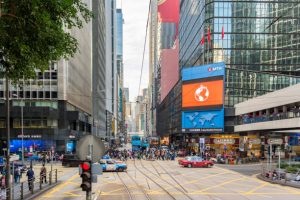
Top employment sectors for visa holders
There is no official Working Holiday Scheme occupation list that guarantees a job. In practice, short-term work is easier to plan where employers are comfortable with temporary contracts and changing staff arrangements. Hospitality, retail, customer service, tutoring, events, tourism-related work and some entry-level office roles can fit that pattern, subject to the employer’s requirements and any professional licensing rules.
The Labour Department’s Interactive Employment Service is useful because it lets you search live vacancies rather than relying only on general discussion forums. On 18 September 2026, its “Top 10 Vacancies” page listed 1,349 live vacancies for shop sales/assistant roles, 1,037 for teachers/tutors, 590 for waiters/waitresses and 534 for general office clerks. These figures describe the wider Hong Kong vacancy market, not jobs reserved for working holiday makers, but they show the types of roles appearing in the government job-search system.
- Hospitality: waiter or waitress, front-of-house, hotel guest services and other customer-facing positions.
- Retail: shop sales, shop assistant and seasonal customer service roles.
- Education support: tutoring and language-related roles where the employer’s requirements are met.
- Events and tourism: short assignments, event support and visitor-facing work.
- Office support: clerical or administrative roles where temporary employment is accepted.
- Specialist or licensed work: only where you satisfy any separate professional, registration or licensing requirements.
Language ability can materially change your options. English is widely used in Hong Kong’s international business and tourism sectors, while Cantonese can be useful for local customer-facing jobs. This is a hiring-market consideration rather than a Working Holiday Scheme eligibility rule. Recent community discussions also show applicants asking about the practical effect of language skills when looking for hospitality and customer-service roles. Treat those comments as personal experience rather than official employment guidance.
Work restrictions and taxation rules
The work restriction is one of the areas where a generic “12-month working holiday” description can give you the wrong impression. Australia, Canada and New Zealand participants, for example, are limited to 3 months with the same employer. Austria, France, Hungary, Japan, Korea and the Netherlands are listed at 6 months with the same employer, while British participants are allowed up to 12 months. Germany is also limited to 3 months.
- Do not assume you can stay with one employer for the whole visa period.
- Read the visa condition that applies to your nationality before signing a long contract.
- Make sure a proposed role is genuinely temporary and consistent with the purpose of the scheme.
- Check whether a regulated occupation requires separate registration, qualifications or a local licence.
- Keep copies of your contract, payslips and payment records from every employer.
- Ask how the employer will report your remuneration for Hong Kong tax purposes.
Working holiday status does not create a blanket exemption from Hong Kong salaries tax. The Inland Revenue Department states that employment income arising from Hong Kong may be taxable whether you are a Hong Kong resident or not, and non-residents are generally subject to the same basic salaries-tax rules as residents.
For the 2026/27 year of assessment, Hong Kong’s progressive salaries-tax rates are 2% on the first HK$50,000 of net chargeable income, 6% on the next HK$50,000, 10% on the next HK$50,000, 14% on the next HK$50,000 and 17% on the remainder. A two-tier standard-rate system also applies in relevant higher-income cases, at 15% on the first HK$5 million of net income and 16% on the excess. Most working holiday makers will not approach those higher-income thresholds, but the rates explain why you should not simply assume that every short-term wage payment is tax-free.
The Employment Ordinance also gives employees statutory protection on matters such as wages and statutory holidays, and qualifying continuous-contract employees can receive additional statutory benefits. The rules changed in 2026, including the definition of a continuous contract from 18 January 2026, so the actual rights attached to a job should be checked against the current employment rules and your working pattern.
The Statutory Minimum Wage is another practical point to check. From 1 May 2026, the statutory rate is HK$43.10 per hour. This is a wage floor rather than a suggested salary level, and specific exclusions under the Minimum Wage Ordinance can apply to certain groups, so you should check whether your employment is covered.
Top attractions to explore when you go on a working holiday in Hong Kong
When you go on a working holiday, it is easy for a short-term job to become the centre of your schedule. Building a simple travel routine helps you use the scheme for its intended cultural experience as well as earning money. Hong Kong is compact enough for an early-morning hike, an evening market visit or a half-day island trip without taking a full holiday from work.
| Attraction | Price | Location | Brief introduction |
|---|---|---|---|
| Victoria Peak | HK$0 for public access and walking viewpoints; paid transport or observation attractions extra | The Peak, Hong Kong Island | City and Victoria Harbour panoramas, with Lugard Road and the Peak area providing several viewpoints. |
| Dragon’s Back | HK$0 trail access | Shek O Country Park, Hong Kong Island | An approximately 8 km coastal ridge route with views towards Shek O, Big Wave Bay and the surrounding coastline. |
| Temple Street and Sham Shui Po | HK$0 to walk around; food and shopping extra | Jordan/Yau Ma Tei and Sham Shui Po, Kowloon | Night-market atmosphere, local food, small shops, street scenes and neighbourhood culture. |
| Lantau Island | HK$0 for Big Buddha public access; Ngong Ping 360 Standard Cabin return adult ticket HK$295 | Lantau Island, Outlying Islands | Combines the 34-metre Tian Tan Buddha, Ngong Ping, mountain scenery and Tai O fishing village. |
Victoria Peak: Panoramic city views and night skylines
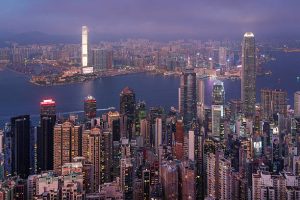
Victoria Peak is one of the easiest places to fit into a working schedule because you can visit without committing to a full-day trip. The Peak area includes walking routes and viewpoints, while Sky Terrace 428 is a separate paid attraction. The Sky Terrace sits 428 metres above sea level and is described by the operator as Hong Kong’s highest viewing platform.
The Peak Tram Central and Peak Terminus are open from 7:30 am to 11 pm, while Sky Terrace 428 is listed as open from 8:30 am to 10 pm.
For someone working irregular shifts, a late afternoon visit can be more practical than scheduling an entire day around sightseeing. The main issue is crowd levels and weather visibility rather than the length of the visit itself.
Dragon’s Back: Scenic ridgeline hiking and beaches

Dragon’s Back sits in Shek O Country Park on Hong Kong Island. The Hong Kong Tourism Board describes the route as about 8 km, with an average hiking time of about 4 hours and moderate difficulty. It runs along a ridge and finishes near Big Wave Bay, making it possible to combine the hike with time at the coast.
This is a useful choice when you want a low-cost day outdoors. Wear shoes with proper grip, bring enough water and check the weather before starting. Hong Kong’s heat and humidity can make a moderate trail feel more demanding than its distance suggests.
Temple Street and Sham Shui Po: Night markets and street food
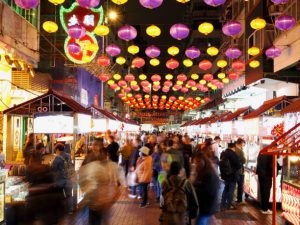
Temple Street and Sham Shui Po offer a very different side of Hong Kong from the business districts. You can walk through busy market areas, compare inexpensive local goods and try small food outlets without paying an attraction admission fee. The practical value for a working holiday maker is flexibility: you can visit after a shift, keep the outing relatively short and decide your spending as you go.
Use the same caution you would use in any busy market. Check prices before ordering where charges are not clearly displayed, keep your phone and wallet secure in crowded areas, and remember that street food and restaurant prices can vary substantially by location.
Lantau Island: The Tian Tan Buddha and Tai O fishing village
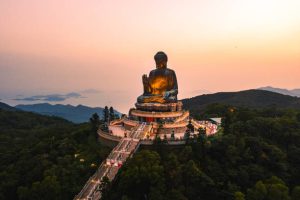
Lantau is Hong Kong’s largest outlying island and gives you a way to combine culture, hiking and coastal scenery in the same trip. The Tian Tan Buddha is 34 metres high and stands beside Po Lin Monastery at Ngong Ping. The Hong Kong Tourism Board lists several ways to reach the area, including the Ngong Ping 360 cable car, New Lantau Bus Route 23 from Tung Chung, and a ferry route from Central to Mui Wo followed by bus.
For 2026, the Ngong Ping 360 official ticket page lists an adult Standard Cabin return ticket at HK$295. The cable car is optional, so you can choose public transport if you are watching your budget.
How to prepare before you go on a working holiday?
The visa application is only one part of the move. A smoother arrival usually depends on having your first accommodation, mobile access, banking arrangements, identification documents and employment search ready before your first working day. You do not need to solve every practical detail before flying, but the first 7 to 14 days are easier when the essentials are already planned.
Finding short-term accommodation
Start with temporary accommodation rather than signing a long tenancy immediately after arrival. This gives you time to understand the neighbourhoods, commute times and actual rental conditions before committing to a longer arrangement. Hong Kong accommodation can involve deposits, agency arrangements, house rules and contract terms that are difficult to assess from abroad.
- Book a secure short initial stay so you have a physical base on arrival.
- Choose accommodation with convenient access to an MTR station or major bus routes if your work location is not fixed.
- Ask clearly whether utilities, Wi-Fi and management charges are included.
- Confirm the deposit amount, refund conditions, minimum stay and notice period in writing.
- Do not transfer a large deposit simply because a listing looks attractive; verify the property and contracting party first.
- Keep screenshots, receipts and copies of the tenancy agreement.
Recent 2026 community discussions about the Hong Kong Working Holiday Visa repeatedly raise accommodation as a practical concern, particularly for new arrivals who have not yet secured regular income. These comments can help you anticipate real-world issues, but they are personal experiences rather than official accommodation policy.
Setting up a local bank account and identity card
If your permission to stay in Hong Kong is more than 180 days, you must register for a Hong Kong Identity Card within 30 days of arrival. The Immigration Department normally takes 5 working days to process an identity-card application, and a new arrival’s first identity card is issued without a fee.
For a bank account, prepare your passport, your immigration or visa documentation, your Hong Kong Identity Card when available, and evidence of your Hong Kong address if the bank requests it. Banks can apply different account-opening procedures, so check the individual bank’s current requirements before visiting a branch or starting an online application.
It is also sensible to keep a backup payment method. A new account may take time to become fully usable, while your first week can involve deposits, transport top-ups, food, phone service and other arrival expenses. Keeping some emergency funds separate from your daily spending account gives you room to deal with unexpected delays.
For job hunting, the Labour Department’s Interactive Employment Service provides online vacancy searches and job-alert functions, while the government’s employment pages give access to current job listings rather than relying entirely on social media or forum posts.
FAQ About HK Working Holiday Visa
1. Can I apply if I am already over 30?
The 2026 Working Holiday Scheme criteria set the age range at 18 to 30. The exact point at which age is assessed can depend on the bilateral arrangement and application circumstances, so you should check the official rules that apply to your nationality before submitting an application.
2. Do I need a job offer before applying?
No. The Working Holiday Scheme is not based on having a confirmed Hong Kong employer before you apply. The core eligibility test is linked to nationality, age, holiday purpose, financial means, return travel and the required insurance.
3. Can I use Form ID 992A for the application?
No. ID 992A is the application for entry for training in Hong Kong. The current Working Holiday guidance is ID(E) 940A, and Working Holiday Scheme applications are submitted through the online system.
4. How long does the working holiday visa take?
The Immigration Department’s 2026 performance pledge targets finalisation of Working Holiday Scheme entry visa applications within 2 weeks after all necessary documents have been received. Treat this as a service target, not a guaranteed result for every case.
5. Is the working holiday visa fee free?
It is free for Irish, Japanese and Republic of Korea participants under the special arrangement. The current ordinary visa fee is HK$330 for other participants. Payment is made after approval, with the exact payment instructions contained in the application result notification.
6. Can I work full-time during my entire 12-month stay?
You can take temporary employment, but the scheme does not allow permanent employment, and the maximum period with one employer varies by nationality. For example, British participants are listed at up to 12 months, while several nationalities are limited to 3 or 6 months with the same employer.
7. Do I have to pay Hong Kong salaries tax?
Potentially. Hong Kong employment income can be subject to Salaries Tax whether you are a resident or non-resident. Your actual liability depends on the source of the employment income, applicable deductions and allowances, and the tax rules for the relevant year of assessment.
8. Can I work for several employers?
The scheme allows temporary employment, but your nationality-specific conditions still apply. Working for more than one employer does not remove the restriction on the maximum duration with an individual employer where such a restriction applies. Keep a clear record of your start and end dates with each employer.
9. Do I need a Hong Kong Identity Card?
If you are permitted to stay in Hong Kong for more than 180 days, you must register for a Hong Kong Identity Card within 30 days of arrival. A person permitted to stay for 180 days or less is generally exempt from this registration requirement.
10. Can I study while holding a Working Holiday Visa?
Study or training can be permitted, but the number and duration of courses depend on your nationality. Ireland has no study allowance under the scheme, while other participating economies have different course limits, so check the condition that applies to your passport.
11. Can I extend the Working Holiday Visa beyond 12 months?
The standard Working Holiday Visa permits a stay of not more than 12 months, and applications for an extension of stay will not normally be considered. A separate immigration route would need to be examined if your circumstances change and you intend to remain in Hong Kong beyond the permitted period.
12. Where can I look for working holiday jobs before arrival?
The Labour Department’s Interactive Employment Service is a useful starting point for live vacancy searches. You can also use employer career pages and mainstream job platforms, while treating Reddit and other forums as informal sources of practical experience rather than as confirmation of immigration or employment rules.
References
- Immigration Department, Working Holiday Scheme.
- Immigration Department, Guidance Notes for Application for Working Holiday Visa, ID(E) 940A.
- Immigration Department, Electronic Services for Visa Application.
- Immigration Department, Fee Tables and 2026 Performance Pledge.
- Labour Department, Working Holiday Scheme and Interactive Employment Service.
- Inland Revenue Department, Salaries Tax and tax information for people working in Hong Kong.
- Hong Kong Tourism Board, Dragon’s Back, Lantau Island and Big Buddha visitor information.
- The Peak Hong Kong and Ngong Ping 360 official visitor and ticket information.
- Reddit community discussions used only for practical, anecdotal experience relating to accommodation, language and job hunting.
Disclaimer
The content of this article reflects the author’s personal views and is provided for informational purposes only. It should not be regarded as professional investment, medical, legal, employment, or other specialist advice. Some information in this article is sourced from publicly available online materials. If any content is found to infringe copyright, please contact the website administrator for prompt removal or correction.
Readers are solely responsible for any actions taken based on the information provided in this article. The website accepts no legal liability for any risks, losses, or damages arising from such actions.
For more details, please see the Disclaimer.